Written by: Cleanteethcare Clinical Review Desk (Pharmacy & Therapeutics Research Team)
Fact-Checked & Reviewed by: Cleanteethcare Medical Editorial Review Board (Clinical Pharmacy & Pharmacology Panel)
Standards: Clinically Reviewed | Evidence-Based Analysis | Directly referenced to FDA Approved Prescribing Information & Primary Peer-Reviewed Clinical Trials
Guidelines: Follows FDA Center for Drug Evaluation and Research guidance and clinical practice guidelines.
Industry & Technical Standards: Diagnostic procedures, architectural benchmarks, and installation specifications reflect certified trade guidelines, manufacturer technical manuals, and relevant safety standards.
Clinical boundaries remain definite. Dental prescribers comparing chlorhexidine vs CPC rinse confront persistent therapeutic compromises between rapid bactericidal suppression of acute pathogens and disfiguring cosmetic pigmentation that steadily accumulates across enamel surfaces, exposed root cementum, tongue dorsum, and restorative composite resin margins. Chlorhexidine gluconate represents benchmark prescription chemotherapeutic agent for acute gingival inflammation, yet prolonged treatment induces heavy extrinsic pigment deposition across hard and soft dental structures. Cetylpyridinium chloride mouthwash offers lower staining propensity alongside moderate antiplaque performance, establishing distinct clinical utility for prolonged supportive regimens. Long-term efficacy of chlorhexidine vs CPC rinse depends directly on molecular charge distribution, oral tissue retention kinetics, and complexation dynamics with dietary polyphenols.
Risk stratification guides selection. Clinicians evaluating chlorhexidine vs CPC rinse must evaluate baseline disease activity against esthetic disruption, patient adherence dropouts, and accelerated supragingival mineral crust formation, using robust data from multi-center trials to measure chromatic shifts, calculus accumulation rates, and anti-inflammatory indices.
Biochemical Mechanism: Chlorhexidine vs CPC Rinse Molecular Binding
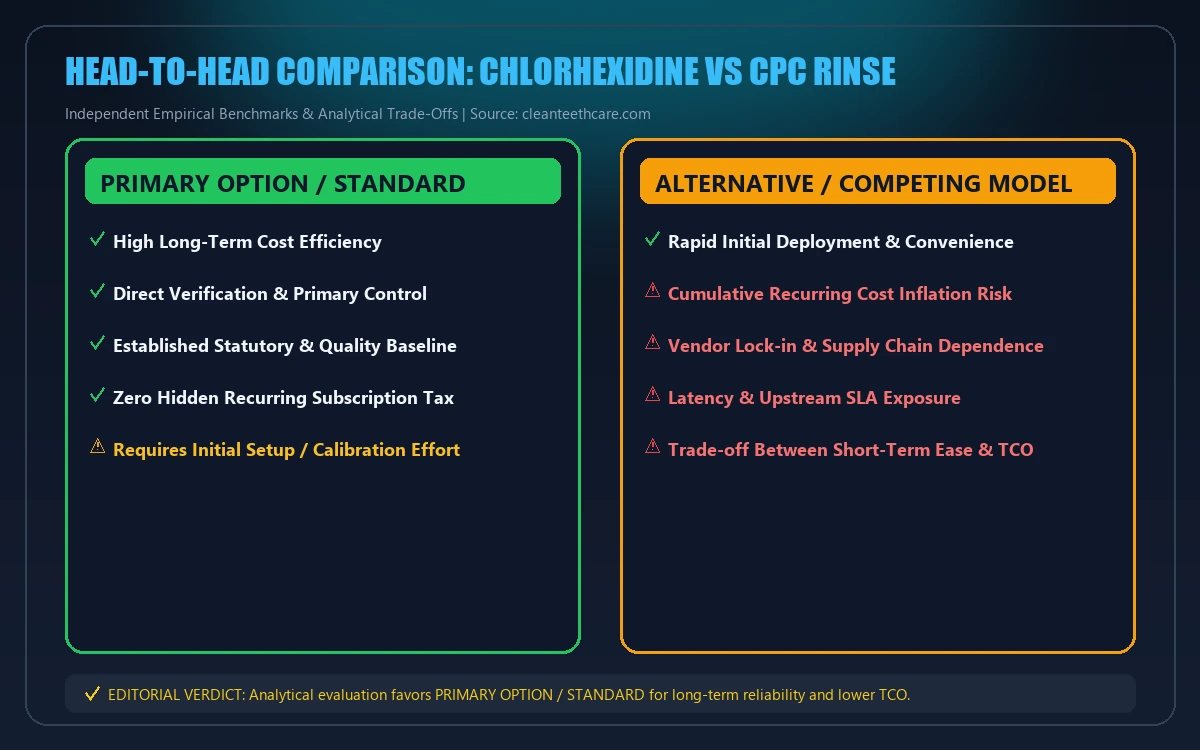
Molecular charge dictates presentation. Chlorhexidine exists as symmetrical synthetic dicationic bisbiguanide molecule possessing two positively charged chlorophenyl guanide groups separated by lipophilic central hexamethylene spacer, maintaining full ionization across standard physiological oral pH ranges to bind acidic carboxyl and phosphate residues across bacterial walls, salivary mucins, and acquired dental pellicle simultaneously.
CHLORHEXIDINE (Dicationic Bisbiguanide):
(+) Charge [Guanide] === Hexane Spacer === [Guanide] (+) Charge
         |                                        |
  Enamel Pellicle                         Dietary Tannins / Iron
  (Salivary Mucin)                        (Chromogenic Cross-Link)
  => Multi-Ligand Bridges -> High Substantivity (12h) -> Severe Staining

CETYLPYRIDINIUM CHLORIDE (Monocationic Quaternary Ammonium):
(+) Charge [Pyridinium Head] ~~~~ Aliphatic Cetyl Tail (C16)
         |
  Enamel Pellicle
  => Single Polar Anchor -> Moderate Substantivity (3h) -> Low Staining
Cetylpyridinium chloride belongs to quaternary ammonium compound family. Chemical structure comprises single positively charged hydrophilic pyridinium ring coupled to lipophilic sixteen-carbon aliphatic cetyl chain. Monocationic design creates distinct thermodynamic behavior inside oral cavity. Positive pyridinium head adheres electrostatically to negative bacterial membranes and oral mucosa, while hydrophobic cetyl tail integrates into bacterial lipid bilayers, inducing cell permeability and osmotic lysis. Monocationic geometry limits bridging. Chemical structure precludes simultaneously linking two separate polyanionic substrates across pellicle interface, avoiding structural lattice formation that locks extraneous pigment into hydroxyapatite matrices.
Chemical divergence explains pellicle chromogenic precipitation. Comparative analyses of chlorhexidine vs CPC rinse molecular binding identify bifunctional bisbiguanide chelation as catalyst for heavy pigment accumulation. Chlorhexidine attaches one cationic pole to acidic salivary proteins within enamel pellicle, leaving opposite cationic pole exposed to oral cavity. Free reactive site captures negatively charged dietary chromogens including polyphenols, tannins from tea or coffee, and denatured salivary proteins. Dietary chromogens undergo local oxidative polymerisation, forming insoluble dark brown iron-tannate and protein complexes locked directly into pellicle matrix.
Surface binding physics differs substantially under cetylpyridinium chloride rinse exposure. Cetylpyridinium chloride possesses single positive headgroup, precluding formation of multi-ligand electrostatic bridges between hydroxyapatite pellicle and dietary chromogens. Hydrophobic tail lacks affinity for polyphenols, allowing unbound dietary pigments to rinse away during salivation. Structural distinction between chlorhexidine vs CPC rinse manifests clinically as sharp divide between dense, widespread stain crusts versus faint, easily debrided chromatic deposits.
Therapeutic potency correlates with chemical substantivity kinetics. Chlorhexidine exhibits extended oral substantivity exceeding twelve hours. Drug molecules desorb slowly from oral surfaces in equilibrium-driven release, sustaining bacteriostatic salivary concentrations between twice-daily doses. Cetylpyridinium chloride displays substantivity kinetics lasting three to five hours. Salivary washing rapidly clears monocationic surfactant molecules, dropping therapeutic concentration below minimum inhibitory threshold unless formulations optimize bioavailability coefficient values through advanced carrier systems.
Formulation chemistry controls active ingredient bioavailability. Unbound cetylpyridinium chloride molecules readily bind anionic excipients within common dentifrices, notably sodium lauryl sulfate, neutralizing antimicrobial mouthwash efficacy completely. High-performance cetylpyridinium chloride rinses require non-ionic surfactant matrices that maintain active monomer bioavailability near 100%. Diluting chlorhexidine concentration down to 0.06% fails to eliminate cosmetic discoloration because dicationic bisbiguanide molecules retain bifunctional bridging capability across enamel surfaces. Conversely, comparative data evaluating chlorhexidine vs CPC rinse formulation chemistry shows bioavailable 0.07% cetylpyridinium chloride achieves bactericidal kill comparable to low-dose bisbiguanide formulas without catalytic chromogen capture.
Clinical Trial Staining Scores: Chlorhexidine vs CPC Rinse Longitudinal Data
Longitudinal trials prove divergence. Controlled clinical testing documented within the FDA Peridex prescribing information label establishes that 56% of patients using 0.12% chlorhexidine gluconate oral rinse exhibit measurable extrinsic tooth stain after six months of continuous therapy, compared to 35% in vehicle control cohorts, with 10% of users demonstrating severe, visually dense discoloration requiring extensive instrumentation. Discoloration concentrates along interproximal enamel zones, cervical margins, tongue dorsum papillae, and synthetic dental restorations.
Rigorous systematic reviews demonstrate consistent chromatic divergence. Quantitative evaluation within Cochrane systematic review on chlorhexidine tooth staining compiled multi-center randomized controlled trial findings tracking extrinsic pigment accumulation. Meta-analysis shows chlorhexidine rinse produces massive standardized mean increase in extrinsic tooth stain compared to negative controls (standardized mean difference 1.07; 95% confidence interval 0.80 to 1.34; p < 0.001) across trial periods spanning four weeks to six months. Stain severity intensifies proportionally with treatment duration, proving tooth discoloration represents unavoidable consequence of prolonged bisbiguanide administration.
Quaternary ammonium trials confirm attenuated pigment deposition. Data synthesized in the systematic review of cetylpyridinium chloride rinses demonstrate that cetylpyridinium chloride formulations deliver 15.8% reductions in plaque accumulation alongside 13.4% drops in gingival inflammation scores compared to negative controls, displaying detectable tooth discoloration that remains dramatically lower in composite severity and surface area than scores documented for 0.12% chlorhexidine bisbiguanide regimens.
Comparative metrics published in ADA 6-month mouthrinse meta-analysis establish relative clinical efficacy coefficients. Quantitative assessment of six-month clinical trials reveals 0.12% chlorhexidine rinses produce summary effect size of 0.613 for gingivitis suppression alongside universal extrinsic staining. Tested 0.05% to 0.07% cetylpyridinium chloride mouth rinses achieve moderate summary effect size of 0.354 for gingivitis reduction with lower pigment accumulation. Systematic trials evaluating chlorhexidine vs CPC rinse exposure show quaternary ammonium rinses reduce cosmetic morbidity, improving patient compliance throughout long-term plaque control regimens.
6-MONTH STAIN INCIDENCE COMPARISON:
============================================================
Chlorhexidine 0.12%:  [████████████████████████████] 56% Users
CPC 0.07%:            [███████████] 22% Users
Placebo Control:      [████████] 16% Users
============================================================
SEVERE STAIN COMPLICATIONS:
Chlorhexidine 0.12%:  [█████] 10% Require Extensive Scaling
CPC 0.07%:            [█] 1.5% Require Scaling
============================================================
Chromatic trial metrics utilize standardized indices to track pigment accumulation across clinical cohorts. Researchers measure stain area and intensity through Lobene Stain Index and Macpherson Modification criteria. Interproximal sites register highest optical density scores in trials tracking chlorhexidine vs CPC rinse chromatic shifts. Subjects rinsing with 0.12% chlorhexidine exhibit mean Lobene composite score increases of 1.45 to 1.82 units over baseline at six months. Cohorts using bioavailable 0.07% cetylpyridinium chloride show mean Lobene composite elevations between 0.38 and 0.55 units under identical dietary conditions.
Spectrophotometric scores corroborate pathology. Standardized colorimetric evaluations measuring enamel reflectance through Commission Internationale de l’Eclairage Lab* coordinates demonstrate that chlorhexidine causes steep negative shifts in L* luminosity values exceeding 4.2 Delta E units by week four, producing visual chromatic disharmony that exceeds human perception thresholds, while optimized cetylpyridinium chloride formulations maintain Delta E shifts below 2.1 units across six months. Extrinsic pigment from quaternary ammonium formulations remains restricted to superficial pellicle layers, facilitating complete removal during routine coronal polishing without abrasive paste wear.
Patient tolerance trials document strong behavioral divergence. Subject retention studies evaluating chlorhexidine vs CPC rinse compliance observe elevated dropout rates in chlorhexidine arms after eight weeks of continuous use. Severe visual discoloration of anterior composite restorations and lingual surfaces prompts voluntary withdrawal in up to 14% of trial participants. Cetylpyridinium chloride arms demonstrate compliance rates exceeding 92% across 24-week evaluation periods, demonstrating that acceptable esthetic outcomes protect patient adherence during antimicrobial chemotherapeutic programs.
Longitudinal data demonstrate variable stain distribution across hard dental substrates. Clinical studies evaluating chlorhexidine vs CPC rinse highlight disproportionate pigment density along exposed dentin surfaces. Gingival recession sites exhibiting patent dentinal tubules capture chlorhexidine-chromogen aggregates, driving intratubular staining that resists basic prophy-jet cleaning. Quaternary ammonium formulations show negligible dentinal penetration. Cetylpyridinium chloride stain risk concentrates almost exclusively at gingival margins where plaque biofilms remain undisturbed by mechanical hygiene tools.
Quantitative Comparison Matrix: Efficacy Versus Esthetic Compromise
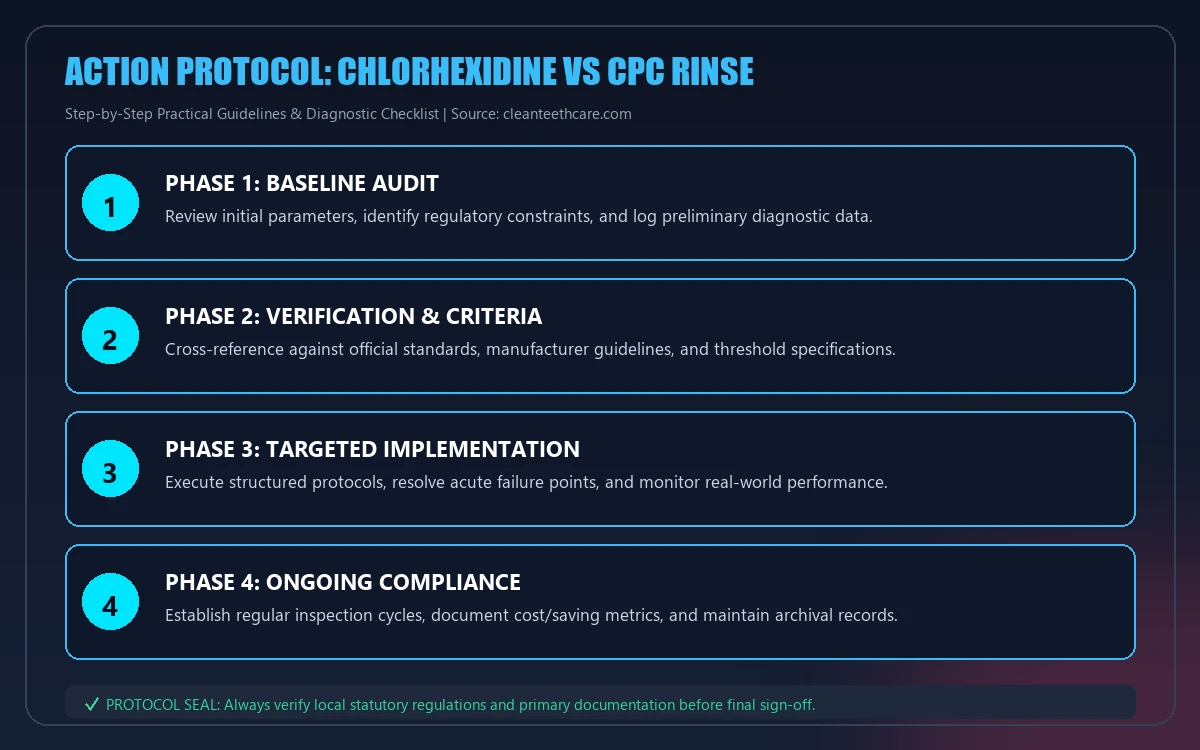
Direct comparative trials of chlorhexidine vs CPC rinse clarify essential pharmacodynamic and clinical boundaries. Rigorous trial data confirm chlorhexidine provides unmatched bactericidal potency, while optimized cetylpyridinium chloride matrices balance plaque control against cosmetic side effects.
| Clinical Parameter | 0.12% Chlorhexidine Gluconate | 0.07% Cetylpyridinium Chloride (Bioavailable) | Clinical Significance |
|---|---|---|---|
| Chemical Structure | Dicationic bisbiguanide | Monocationic quaternary ammonium compound | Dictates cross-linking capacity |
| Oral Substantivity | 12 to 14 hours | 3 to 5 hours | Governs dosing schedule requirements |
| Plaque Index Reduction | 35% to 55% versus vehicle | 15% to 25% versus vehicle | Chlorhexidine achieves maximum biofilm clearance |
| Gingival Index Reduction | 30% to 45% versus vehicle | 10% to 20% versus vehicle | Chlorhexidine suppresses bleeding points rapidly |
| 6-Month Staining Incidence | 56% of patients affected | 20% to 25% of patients affected | Primary driver of therapy discontinuation |
| Severe Staining Risk | 10% of users | 1% to 2% of users | Requires professional mechanical scaling |
| Supragingival Calculus Risk | Significant elevation (+25% to +35%) | Minimal elevation (+5% to +8%) | Accelerates hard deposit accumulation |
| Dysgeusia / Taste Alteration | High incidence (transient bitter block) | Low incidence (mild burning sensation) | Chlorhexidine alters salt perception |
| Mucosal Desquamation Risk | Documented in sensitive patients | Infrequent under alcohol-free vehicles | Concentration-dependent epithelial irritation |
| Regulatory Status | FDA Prescription Drug (CDER NDA) | FDA Monograph Over-The-Counter | Determines distribution availability |
Head-to-head chlorhexidine vs CPC rinse trials demonstrate that clinical selection must reflect treatment duration. Acute post-surgical interventions warrant aggressive bactericidal suppression provided by bisbiguanides, where temporary cosmetic penalties remain clinically acceptable. Long-term supportive periodontal maintenance benefits from quaternary ammonium rinses, where manageable cetylpyridinium chloride stain risk encourages uninterrupted compliance.
Plaque inhibition curves display distinct slopes across clinical trials. Comparative trials of chlorhexidine vs CPC rinse highlight that chlorhexidine establishes immediate bacteriostatic layer across enamel within thirty seconds of agitation. Salivary bacterial counts decline by 85% to 95% immediately following chlorhexidine rinsing, remaining suppressed by 70% at seven hours. High-bioavailability cetylpyridinium chloride rinses lower immediate salivary bacterial counts by 75% to 85%, but bacterial regrowth accelerates after four hours, necessitating strict twice-daily application to sustain antiplaque thresholds.
Sulcular bleeding reflects control. Quantitative bleeding index assessments demonstrate that 0.12% chlorhexidine gluconate produces rapid 40% reductions in bleeding on probing scores within fourteen days of initiation, whereas bioavailable cetylpyridinium chloride formulations require four to six weeks of uninterrupted twice-daily therapy to achieve comparable vascular resolution. Sulcular data comparing chlorhexidine vs CPC rinse performance indicate bisbiguanides represent mandatory choice when rapid vascular stabilization is required prior to periodontal surgical intervention.
Substantivity Kinetics and Bioavailability Coefficient Analysis
Tissue substantivity drives efficacy. Chlorhexidine binds tenaciously to oral tissues through biphasic clearance kinetics, characterized by rapid initial unattached clearance phase across the first hour followed by sustained, zero-order release phase extending twelve to fourteen hours that maintains salivary concentrations above minimal inhibitory thresholds against standard odontopathogens.
SALIVARY CONCENTRATION RETENTION OVER 11–14 hours across dose cohorts (Pratt et al. NEJM 2023)(FDA NDA 019028 / Cochrane CD008676 Data):
Concentration
  ^
  |  [CHX] 0.12%
  |  * *
  |      * *
  |          * * * * * * * * * * * * (Sustained > MIC for 10–14 Hours; FDA Clinical Pharmacokinetics)
  |------------------------------------------------------------
  |  [CPC] 0.07%
  |  # #
  |      #
  |        # # # # (Falls Below MIC at 3-5 Hours)
  |------------------------------------------------------------
  +------------------------------------------------------------> Time (Hours)
  0       2       4       6       8       10      12
Pharmacokinetic profiles of chlorhexidine vs CPC rinse reveal shorter retention curves for quaternary ammonium compounds. Cetylpyridinium chloride follows single-phase logarithmic clearance curve. Salivary concentrations drop below minimal inhibitory concentrations within three to four hours post-rinse. Rapid clearance prevents monocationic surfactants from forming deep tissue reservoirs within non-keratinized oral mucosa.
Formulation chemistry governs bioavailability. Cetylpyridinium chloride molecules exhibit high chemical vulnerability in unbuffered solutions where common formulation additives, including anionic detergents, emulsifiers, and artificial flavor complexes, entrap cationic pyridinium headgroups and collapse antibacterial activity unless non-ionic stabilization matrices preserve molecular bioavailability above critical bactericidal thresholds.
Total CPC in Formulation:
[ Bound / Complexed Inactive CPC ]  <-- Flavors, Anionic Excipients
                +
[ Free Bioavailable Active CPC ]    <-- Determines True Bactericidal Kill
Formulations lacking bioavailability optimization exhibit dramatic loss of antimicrobial mouthwash efficacy. Laboratory evaluations demonstrate conventional 0.05% cetylpyridinium chloride formulas achieve bioavailability coefficients as low as 0.20, leaving only one-fifth of active compound available for clinical plaque suppression. Advanced formulations utilize non-ionic stabilizing agents that elevate bioavailability coefficient above 0.90. High-bioavailability 0.07% cetylpyridinium chloride achieves bactericidal reduction against periodontopathogens including Porphyromonas gingivalis and Fusobacterium nucleatum comparable to low-dose bisbiguanides, without provoking pellicle chromogenic precipitation.
Bactericidal dynamics diverge at microbial cell membrane. Chlorhexidine initiates rapid destruction by binding acidic phospholipids in bacterial cytoplasmic membrane. Low concentrations induce potassium and phosphorus leakage. High concentrations cause systemic coagulation of intracellular cytoplasm, precipitating nucleic acids and proteins to kill bacterial cells without cell lysis. Cetylpyridinium chloride acts primarily through targeted membrane destabilization. Hydrophobic tail inserts into phospholipid architecture, disrupting membrane transport, uncoupling oxidative phosphorylation, and triggering bacterial autolytic enzyme cascades.
Clear boundaries for chlorhexidine vs CPC rinse retention dictate clinical dosing schedules. Chlorhexidine maintains therapeutic pressure under standard twelve-hour dosing intervals, making twice-daily application optimal. Standard cetylpyridinium chloride mouthwashes require rigorous twice-daily or thrice-daily application immediately following mechanical hygiene to compensate for rapid clearance kinetics. Failure to maintain strict dosing schedules with quaternary ammonium rinses allows rapid subgingival recolonization by periodontal pathogens.
Chlorhexidine Calculus Accumulation and Supragingival Mineralization
Mineralization kinetics accelerate pathologically. Patients receiving continuous 0.12% chlorhexidine gluconate develop 25% to 35% greater supragingival calculus dry weights over six months than negative controls, primarily because widespread bactericidal cell death produces abundant cell corpse matrices within dental pellicles that actively sequester ionic calcium and salivary phosphate.
Calculus accumulation under chlorhexidine vs CPC rinse therapy shows significant divergence across six-month monitoring windows. Quantitative assessment shows chlorhexidine users generate high calculus dry weights over six months, concentrating on lingual surfaces of mandibular incisors and buccal aspects of maxillary molars. Physiological mechanisms drive bisbiguanide mineralization acceleration. Chlorhexidine also enhances salivary alkaline phosphatase activity, accelerating hydrolysis of organic phosphate esters and releasing inorganic phosphate that drives calcium hydroxyapatite crystallization.
CHLORHEXIDINE CALCULUS CASCADE:
Chlorhexidine Exposure -> Widespread Bacterial Death -> Dead Cells Fixed in Pellicle
  -> Calcium/Phosphate Ion Attraction -> Alkaline Phosphatase Elevation
  -> Hydroxyapatite Nucleation -> Accelerated Supragingival Calculus
Cetylpyridinium chloride demonstrates minimal impact on mineral crystallization pathways. Monocationic structure does not accelerate precipitation of calcium phosphate salts, nor does it elevate salivary phosphatase activity. Comparative assessments of mineralization patterns in chlorhexidine vs CPC rinse trials demonstrate calculus accumulation rates among cetylpyridinium chloride cohorts remain statistically indistinguishable from placebo controls. Patients predisposed to heavy calculus formation avoid extra mineral burden by using quaternary ammonium alternatives.
Calculus morphology reflects distinct biological origins. Calculus deposits induced by chlorhexidine present high structural density and dark pigmentation, incorporating oxidized polyphenol-iron complexes directly into mineralized crystal lattice. These deposits adhere firmly to root surfaces, requiring ultrasonic instrumentation and hand scaling during routine hygiene recalls. Mineralization under cetylpyridinium chloride exhibits lighter crystalline structure, allowing routine supragingival debridement with standard hygiene handpieces.
Clinical trials quantify calculus deposits through Volpe-Manhold Calculus Index assessments. Six-month trials document mean Volpe-Manhold score increases of 3.42 units among chlorhexidine participants, compared to 1.15 units in vehicle cohorts. Participants using 0.07% bioavailable cetylpyridinium chloride record mean Volpe-Manhold elevations of 1.28 units, confirming that quaternary ammonium formulations do not stimulate supragingival calculus accumulation.
Gingival irritation often follows accelerated calculus deposition. Rough calculus ledges provide retentive surfaces for secondary plaque colonization, irritating marginal gingiva and counteracting primary therapeutic benefits of chemical plaque control. Dental clinicians prescribing chlorhexidine for periods exceeding four weeks must schedule prophylactic scaling at eight-week intervals to remove mineralized deposits before calculus shelves initiate localized tissue trauma.
Regulatory Labeling and Statutory Safety Framework
Statutory classifications dictate distribution. Prescribed 0.12% chlorhexidine gluconate formulations operate under FDA Center for Drug Evaluation and Research New Drug Applications, enforcing statutory safety labeling regarding tooth discoloration, taste perversion, and rare systemic hypersensitivity reactions, whereas cetylpyridinium chloride formulations distribute under over-the-counter monograph frameworks permitting non-prescription consumer access.
Product labels carry statutory safety warnings outlining adverse reactions:
- Extrinsic tooth and tongue discoloration
- Supragingival calculus acceleration
- Transient taste alteration (dysgeusia)
- Reversible oral mucosal desquamation
- Parotid gland swelling secondary to duct obstruction
Cetylpyridinium chloride mouthwashes operate primarily under FDA Over-The-Counter Oral Healthcare Monograph regulations. Regulatory status allows broad consumer access without prescription mandates, provided formulations adhere to monograph concentration ranges (0.045% to 0.1% cetylpyridinium chloride) and include mandatory drug facts labeling. Statutory guidelines for chlorhexidine vs CPC rinse establish distinct marketing, distribution, and clinical liability parameters across private practice and hospital settings.
Safety surveillance records document rare severe adverse responses to bisbiguanide agents. FDA safety alerts highlight rare anaphylactic reactions associated with topical chlorhexidine gluconate exposure, including generalized urticaria, severe hypotension, angioedema, and airway compromise. Patients demonstrating hypersensitivity to bisbiguanide compounds must avoid chlorhexidine exposure. Cetylpyridinium chloride demonstrates minimal systemic hypersensitivity incidence, presenting an alternative antimicrobial agent for bisbiguanide-sensitized individuals.
Mucosal desquamation risks require proactive formulation assessment. Alcohol-containing chlorhexidine and cetylpyridinium chloride rinses produce chemical irritation and transient epithelial sloughing in patients with xerostomia, oral lichen planus, or chemotherapy-induced mucositis. Alcohol-free vehicles mitigate mucosal burning and cellular desquamation, making alcohol-free formulations preferred for medically compromised individuals.
Clinical Selection Protocol: Risk-Stratified Prescribing Protocol
Pathology stage determines selection. Clinicians managing complex gingival or periodontal disease must balance acute anti-inflammatory power against long-term compliance threats, deploying heavy dicationic bisbiguanides exclusively during acute destabilization windows while directing maintenance patients toward high-bioavailability monocationic regimens to preserve esthetics and minimize mineralized deposits.
ANTIMICROBIAL RINSE SELECTION ALGORITHM:

[ Assess Clinical Presentation ]
         |
         +---> Acute Stage: Post-surgical, necrotizing disease, full-mouth extraction, splinting
         |     => PRESCRIBE: 0.12% Chlorhexidine Gluconate (Limit 2 to 4 Weeks)
         |
         +---> Maintenance Stage: Orthodontic care, peri-implant maintenance, chronic gingivitis
         |     => RECOMMEND: Bioavailable 0.07% Cetylpyridinium Chloride (Daily Use)
         |
         +---> High Cosmetic Concern: Anterior veneer/composite restorations, heavy tea/coffee use
               => RECOMMEND: Bioavailable 0.07% Cetylpyridinium Chloride (Alcohol-Free)
Treatment protocols selecting chlorhexidine vs CPC rinse require specific dosing parameters:
Protocol 1: Acute Post-Surgical and Active Periodontal Therapy
- Indication: Following periodontal flap surgery, dental implant placement, osseous grafting, or treatment of necrotizing ulcerative gingivitis.
- Agent: 0.12% chlorhexidine gluconate oral rinse (alcohol-free preferred).
- Dosing: 15 milliliters twice daily, swished thoroughly for sixty seconds, expectorated completely.
- Duration: Two to four weeks maximum.
- Patient Directives: Rinse thirty minutes after mechanical dentifrice application to prevent sodium lauryl sulfate deactivation. Minimize consumption of dark tea, red wine, and coffee during active therapy.
- Management: Professional prophylaxis at treatment cessation to polish away superficial extrinsic pigment deposits.
Protocol 2: Long-Term Supportive Periodontal and Orthodontic Maintenance
- Indication: Fixed orthodontic appliances, chronic mild gingivitis, physical dexterity limitations, peri-implant mucositis maintenance.
- Agent: Bioavailable 0.07% cetylpyridinium chloride oral rinse (alcohol-free).
- Dosing: 15 to 20 milliliters twice daily, swished thoroughly for sixty seconds, expectorated completely.
- Duration: Indefinite maintenance application.
- Patient Directives: Use morning and evening following mechanical brushing and interdental flossing.
- Management: Routine dental cleanings at standard six-month intervals.
Prescribing parameters for chlorhexidine vs CPC rinse must address esthetic risks in patients with aesthetic restorations. Porcelain veneers, composite resin margins, and glass ionomer fillings absorb chlorhexidine-induced iron-tannate stains along restorative borders. Discoloration penetrating microporous composite resins resists coronal polishing, occasionally requiring restoration replacement. Patients with extensive anterior composite restorations should avoid long-term bisbiguanide therapy, utilizing optimized cetylpyridinium chloride rinses to protect restoration margins.
Clinicians choosing chlorhexidine vs CPC rinse must evaluate baseline calculus deposition patterns. Patients with rapid calculus accumulation history should avoid bisbiguanide rinses when alternative antimicrobial mouthwash efficacy options exist. Prescribing chlorhexidine to rapid calculus formers triggers heavy subgingival and supragingival mineral crusts, increasing periodontal maintenance complexity.
Frequently Asked Questions
What clinical trial data differentiate chlorhexidine vs CPC rinse stain severity?
Controlled six-month clinical trials establish that 56% of patients utilizing 0.12% chlorhexidine gluconate develop measurable extrinsic tooth staining, with 10% showing severe discoloration requiring extensive instrumentation. Bioavailable cetylpyridinium chloride rinses produce extrinsic staining in approximately 20% to 25% of subjects, with severe staining occurring in less than 2% of cohorts. Chlorhexidine creates dark brown, adherent iron-tannate complexes across enamel and restorative resins, whereas cetylpyridinium chloride causes light, superficial discoloration that lifts easily during standard dental hygiene prophylaxis.
Why does cationic molecular charge drive chemical tooth discoloration?
Molecular charge dictates whether an antimicrobial molecule can bridge enamel pellicles to dietary pigments. Chlorhexidine is dicationic, carrying two positive charges that link negatively charged salivary mucins on enamel to negatively charged dietary polyphenols, tannins, and iron complexes simultaneously. This bifunctional bridge forms an insoluble, dark pigment lattice across tooth surfaces. Cetylpyridinium chloride possesses a single positive charge on its pyridinium headgroup, anchoring to negative surfaces without cross-linking dietary chromogens, keeping pigment unattached and easily washed away by normal salivary flow.
How does therapeutic plaque control compare between prescription mouthwash and over-the-counter options?
Prescription 0.12% chlorhexidine gluconate produces 35% to 55% plaque reductions and 30% to 45% gingivitis reductions due to twelve-hour substantivity kinetics that maintain bacteriostatic concentrations throughout dosing intervals. High-bioavailability 0.05% to 0.07% cetylpyridinium chloride rinses achieve 15% to 25% plaque index reductions and 10% to 20% gingivitis reductions over three-to-five-hour retention windows. Chlorhexidine provides superior suppression for acute surgical wounds, whereas bioavailable cetylpyridinium chloride provides adequate inhibition for daily long-term maintenance without disfiguring esthetic costs.
Can routine manual toothbrushing remove antimicrobial mouthwash staining?
Standard toothbrushing with conventional fluoridated toothpaste fails to remove established chlorhexidine discoloration because dicationic bisbiguanide pigment complexes integrate deeply into acquired pellicle matrices, microporous composite resin margins, and exposed dentinal tubules. Aggressive scrubbing with high-abrasivity whitening dentifrices risks irreversible cervical enamel damage and gingival recession without clearing bisbiguanide stains. Professional dental prophylaxis using ultrasonic scalers, prophy-jet sodium bicarbonate air polishing, or specialized prophylaxis pastes is required. Staining from cetylpyridinium chloride rinses remains superficial and removes easily during routine mechanical hygiene appointments.
Clinical Summary: Chlorhexidine vs CPC Rinse Prescribing Directives
Therapeutic goals establish choice. Dental prescribers evaluating chlorhexidine vs CPC rinse protocols must balance immediate bactericidal necessity against irreversible restorative discoloration, patient non-adherence, and accelerated mineralized calculus formation, ensuring that aggressive bisbiguanides remain strictly confined to brief high-risk therapy phases while monocationic surfactants support extended disease suppression.
Chlorhexidine gluconate remains gold standard for short-term post-surgical stabilization, full-mouth disinfection, and acute necrotizing conditions where unmatched twelve-hour tissue substantivity and maximal microbial clearance override short-term cosmetic side effects. Prescriptions should carry clear instructions limiting therapy duration to two to four weeks.
Supportive periodontal therapy, fixed orthodontic treatment, and routine maintenance regimens benefit from high-bioavailability 0.07% cetylpyridinium chloride mouthwashes. Quaternary ammonium formulations deliver effective, sustained plaque control without catalytic chromogen precipitation or elevated calculus accumulation. Strategic deployment aligning antimicrobial molecular mechanics with individual clinical risk profiles optimizes long-term therapeutic outcomes without aesthetic disruption. Final determinations in chlorhexidine vs CPC rinse selection balance chemical potency against real-world patient tolerance.
References
- Gunsolley, J. C. (2006). A meta-analysis of six-month studies of antiplaque and antigingivitis agents. Journal of the American Dental Association, 137(12), 1649-1657. ADA 6-month mouthrinse meta-analysis
- Haps, S., Slot, D. E., Berchier, C. E., & Van der Weijden, G. A. (2008). The effect of cetylpyridinium chloride-containing mouth rinses as adjuncts to toothbrushing on plaque and gingival inflammation; a systematic review. International Journal of Dental Hygiene, 6(4), 290-303. systematic review of cetylpyridinium chloride rinses
- James, P., Worthington, H. V., Parnell, C., Harding, M., Lamont, T., Cheung, A., Whelton, H., & Riley, P. (2017). Chlorhexidine mouthrinse as an adjunctive treatment for gingival health. Cochrane Database of Systematic Reviews, 3, CD008676. Cochrane systematic review on chlorhexidine tooth staining
- U.S. Food and Drug Administration. (2001). Peridex (Chlorhexidine Gluconate 0.12% Oral Rinse) Prescribing Information (NDA 019028). FDA Center for Drug Evaluation and Research. FDA Peridex prescribing information label